Introduction to AWS Elastic Kubernetes Service (EKS)
My name is Hamza Rehman. I'm a passionate DevOps enthusiast. With a deep interest in open-source technologies and automation, I enjoys to share my knowledge and insights with the community.
Amazon Elastic Kubernetes Service (EKS) is a fully managed service that makes it easy to run Kubernetes on AWS without needing to install and operate your own Kubernetes control plane or nodes.
What is AWS EKS?
AWS EKS is a managed service that allows you to run Kubernetes on AWS. Kubernetes is an open-source system for automating the deployment, scaling, and management of containerized applications. EKS simplifies the process by handling the management of the Kubernetes control plane and its associated components, making it easier to run Kubernetes clusters on AWS.
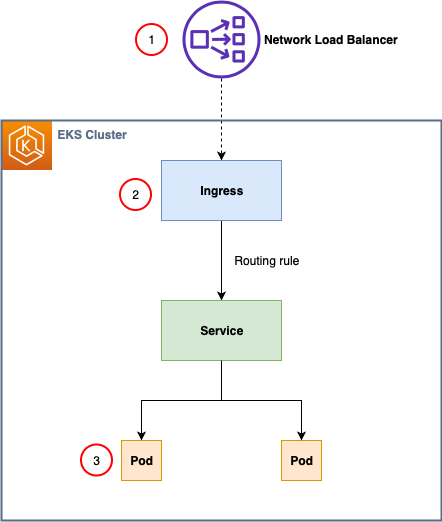
Key Features of AWS EKS
1. Fully Managed Kubernetes
EKS provides a fully managed Kubernetes control plane, which includes the Kubernetes API servers and the etcd persistence layer. AWS manages the availability and scalability of the control plane nodes across multiple AWS Availability Zones.
2. Integration with AWS Services
EKS integrates seamlessly with various AWS services such as IAM for authentication, CloudWatch for monitoring, and VPC for networking. This integration provides a cohesive environment for running Kubernetes workloads on AWS.
3. High Availability and Scalability
EKS automatically distributes the Kubernetes control plane across multiple Availability Zones to ensure high availability and fault tolerance. It also provides automatic scaling of worker nodes based on your application's needs.
4. Enhanced Security
EKS leverages AWS security features, including IAM roles for service accounts, VPC network policies, and security groups to provide a secure environment for your Kubernetes workloads. It also integrates with AWS Secrets Manager and AWS KMS for secure storage of sensitive information.
5. Support for Kubernetes Ecosystem
EKS is fully compatible with the Kubernetes ecosystem, allowing you to use popular Kubernetes tools and plugins such as Helm, Prometheus, and Istio. This compatibility makes it easy to migrate existing Kubernetes workloads to EKS.
6. EKS Fargate
EKS supports AWS Fargate, allowing you to run Kubernetes pods on a serverless compute engine. Fargate eliminates the need to manage the underlying infrastructure, simplifying the deployment and scaling of containerized applications.
Advanced Features
1. EKS Managed Node Groups
EKS managed node groups simplify the process of managing worker nodes. AWS handles the provisioning, updating, and scaling of the nodes, ensuring that they are always running the latest security patches and updates.
2. EKS on Fargate
EKS on Fargate allows you to run Kubernetes pods on a serverless compute engine, eliminating the need to manage the underlying infrastructure. This is ideal for running short-lived or variable workloads.
3. Cluster Autoscaler
The Cluster Autoscaler automatically adjusts the number of worker nodes in your EKS cluster based on the resource requirements of your applications. This helps ensure that your applications have the necessary resources to run efficiently.
4. AWS App Mesh Integration
AWS App Mesh provides application-level networking for your microservices, making it easy to manage and monitor communication between services. EKS integrates with App Mesh, allowing you to leverage its capabilities for your Kubernetes workloads.
5. Logging and Monitoring
EKS integrates with Amazon CloudWatch for logging and monitoring, providing insights into the performance and health of your Kubernetes clusters. You can set up CloudWatch alarms to notify you of any issues.

Conclusion
Amazon Elastic Kubernetes Service (EKS) is a powerful and scalable managed Kubernetes service that simplifies the deployment and management of containerized applications on AWS. With its robust security features, seamless integration with AWS services, and advanced capabilities like EKS Fargate and managed node groups, EKS provides a comprehensive solution for running Kubernetes workloads in the cloud. Whether you are building microservices, deploying enterprise applications, or running machine learning workloads, EKS helps streamline your Kubernetes workflows and enhance your deployment process.
